From Waste to Seeds: Developing Natural Seed Coatings for Sustainable Agriculture

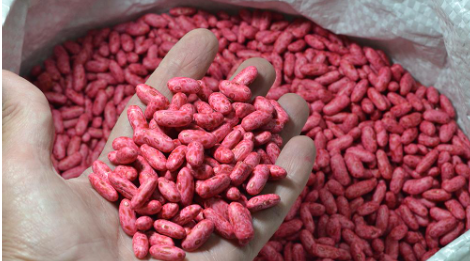
Peanut seeds that have been previously inoculated with a biopolymer coating | Mariana Melchiorre
Hello, Fams! Have you ever wondered what happens to agricultural waste after the harvest is over? Rice husks, corn cobs, sugarcane bagasse, and other crop residues are often seen as waste. But what if some of these materials could have another purpose—not as waste, but as a useful material to help seeds grow? This idea is part of a growing effort to develop natural seed coatings for more sustainable agriculture.
Seed coating is a technique that applies a thin layer of material to the surface of a seed before planting. This layer can help protect the seed and deliver useful substances during the early stages of growth. Researchers have explored different coating materials, including biopolymers such as alginate, cellulose-based materials, starch, and other natural polymers. Besides being biodegradable, these materials can also act as carriers for beneficial microorganisms or other substances needed by the seed.
So, where does agricultural waste come into the picture? Some crop residues contain valuable natural polymers that can be processed into materials for seed treatment. For example, corn cobs, rice husks, sugarcane bagasse, and wheat straw can be sources of biomass-derived polymers. Instead of leaving these residues unused, they can potentially be processed into biodegradable materials for agricultural applications. This approach connects seed technology with the idea of a circular bioeconomy, where agricultural waste is returned to the production cycle as a useful resource.
press service of NSTU NETI | Victor Guskov
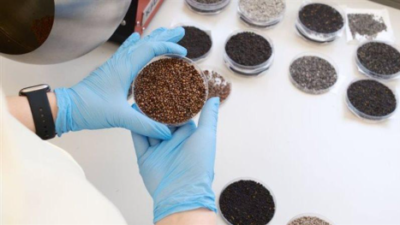
The process may sound complicated, but the basic idea is quite simple. First, useful components are extracted from selected agricultural residues. The extracted material is then formulated into a coating solution or film-forming material. After that, the coating is applied evenly to the seed and allowed to dry. The final coating should be strong enough to stay on the seed, but still allow water and oxygen to reach it during germination. Researchers also need to test whether the coating affects germination, seedling growth, and the overall quality of the seed.
Natural seed coatings can offer more than just physical protection. They can also become a carrier for beneficial microorganisms such as Trichoderma or plant-growth-promoting bacteria. These microorganisms may support seedling establishment and help plants deal with certain environmental or biological stresses. Studies on biopolymer-based seed coating have shown that coating materials can help maintain beneficial microorganisms on seeds while supporting germination and early plant growth.
However, Fams, turning agricultural waste into a reliable seed coating is not as simple as mixing waste with water. The material needs to be safe, biodegradable, compatible with the seed, and able to provide consistent coating quality. Different crops and seed types may also respond differently to the same material. Therefore, further research and field testing are still needed before these technologies can be widely applied by farmers.
Ultimately, From Waste to Seeds is more than an idea about recycling. It shows how agricultural technology can create new connections between waste management and crop production. By transforming agricultural residues into useful natural materials, we can reduce waste while exploring new ways to support healthy seed establishment. Perhaps, Fams, the next step toward sustainable agriculture does not always have to start with something new—it can start with something we used to call waste. (ZUI)
Author : Muthi’ah Azizah
References:
Chin, J. M., Lim, Y. Y., & Ting, A. S. Y. (2022). Biopriming Pseudomonas fluorescens to
vegetable seeds with biopolymers to promote coating efficacy, seed germination and disease suppression. Journal of the Saudi Society of Agricultural Sciences, 21, 493–505.
Chin, J. M., Lim, Y. Y., & Ting, A. S. Y. (2021). Biopolymers for biopriming of Brassica rapa
seeds: A study on coating efficacy, bioagent viability and seed germination. Journal of the Saudi Society of Agricultural Sciences, 20, 198–207.
O’Callaghan, M. (2016). Microbial inoculation of seed for improved crop performance:
Issues and opportunities. Applied Microbiology and Biotechnology, 100, 5729–5746.
Pedrini, S., Merritt, D. J., Stevens, J., & Dixon, K. W. (2017). Seed coating: Science
or marketing spin? Trends in Plant Science, 22(2), 106–116.
Recent advances in seed coating technologies: transitioning toward sustainable agriculture.
(2022). Green Chemistry, 24, 6052–6085