
Internet Beneath Our Feet: The Hidden Connections Between Plants and Fungi

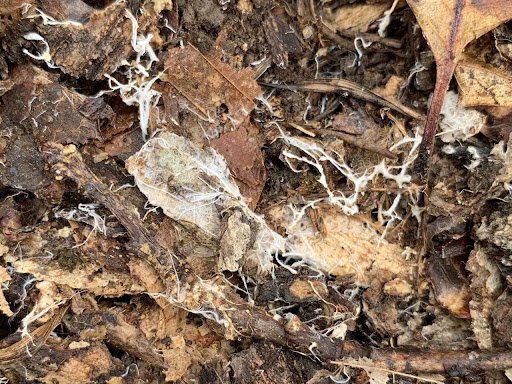
Mycelium in forest floor | Isabel Openshaw
Hello, Fams! Have you ever wondered what happens beneath the ground while a forest looks peaceful? Above the soil, trees grow toward sunlight and leaves move with the wind. But below the surface, another world is quietly at work. Plant roots interact with tiny organisms, including fungi, creating relationships that support life in many ecosystems. Some of these underground connections have inspired the term “wood-wide web”, a fascinating idea that makes us look at forests differently. But how does this hidden network actually work?
One important relationship is called mycorrhiza, an association between certain fungi and plant roots. Fungi grow fine threads called hyphae, which spread through the soil and help them explore areas that roots may not easily reach. Through this relationship, fungi can help plants obtain nutrients, especially phosphorus, and sometimes improve access to water. In return, plants provide carbon-rich compounds made through photosynthesis. Both organisms can benefit from this partnership, although the results depend on the plant species, fungal species, and environmental conditions.
In some cases, mycorrhizal fungi can connect with the roots of different plants, potentially forming common mycorrhizal networks (CMNs). These networks have attracted scientific attention because they may allow certain resources, such as carbon, to move between plants. Researchers have investigated these connections through laboratory experiments and field studies. A 2023 review by Klein and colleagues discussed evidence of carbon movement through mycorrhizal networks, while also highlighting questions about their importance in natural ecosystems. This suggests that underground relationships may influence plant communities, although their effects are not always the same.
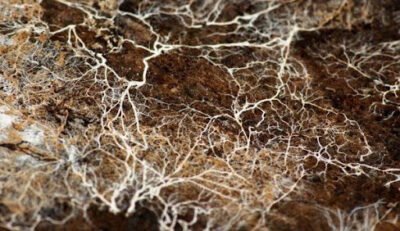
Wood-wide Web | Kirill Ignatyev
Because of these discoveries, people often describe fungal networks as an underground internet. However, this comparison has its limits. Digital networks transmit messages, while fungal networks are living biological systems with different functions. Although plants and fungi interact in complex ways, it is still uncertain how often these networks support communication or resource sharing between plants in natural forests. In 2024, Merckx and colleagues discussed the evidence for these networks while emphasizing the need to avoid exaggerated claims. The idea is exciting, but science requires us to separate proven findings from assumptions.
It is also important to remember that fungi do not simply act as delivery systems for plants. They are living organisms that need energy and nutrients to survive. Plants supply carbon to their fungal partners, while fungi can help plants access certain soil resources. This relationship is not always equally beneficial, and it does not mean older trees automatically feed younger trees through underground connections. Researchers continue to study how these networks form, how resources move, and when these interactions provide meaningful benefits. Understanding these limits helps us appreciate the science more accurately.
For agriculture students, this topic offers an important lesson about soil health. Soil is not merely a place where crops grow; it is a living environment filled with organisms that influence plant development. Some mycorrhizal fungi can support nutrient uptake and contribute to plant growth, making them interesting for sustainable agricultural research. In the future, understanding these relationships may help improve soil management and fertilizer efficiency. However, their effectiveness varies depending on crops and field conditions, so practical applications still require appropriate testing and local research.
The “wood-wide web” reminds us that nature is connected in ways we cannot always see. Beneath our feet, roots, fungi, and other soil organisms interact as part of a complex ecosystem. Yet, this story is not only about discovering hidden connections; it is also about learning to ask better scientific questions. Which plants benefit from these networks? How important are they in real forests? And can we use this knowledge responsibly in agriculture? These questions show why studying soil biology matters, especially as we search for more sustainable ways to grow food.
The next time we walk through a forest or visit an agricultural field, perhaps we will see the soil differently. What looks like ordinary ground may contain relationships that help shape the ecosystem above it. The underground world of fungi and plant roots still holds many unanswered questions, offering exciting opportunities for future research. Sometimes, understanding life above the ground begins with paying attention to what happens beneath it. And perhaps, by exploring this hidden world, we can find new ways to care for the land that sustains us. (ZUI)
Author: Muthi’ah Azizah
References:
Merckx, V. S. F. T., Gomes, S. I. F., Wang, D., Verbeek, C., Jacquemyn, H., Zahn, F. E., Gebauer, G., & Bidartondo, M. I. (2024). Mycoheterotrophy in the wood-wide web. Nature Plants, 10.
Klein, T., Rog, I., Livne-Luzon, S., van der Heijden, M. G. A., & Körner, C. (2023). Belowground carbon transfer across mycorrhizal networks among trees: Facts, not fantasy. Open Research Europe, 3, 168.
Karst, J., Jones, M. D., & Hoeksema, J. D. (2023). Positive citation bias and overinterpreted results lead to misinformation on common mycorrhizal networks in forests. Nature Ecology & Evolution, 7, 501–511.