
When Butterflies Lose Their Colors, Nature Sends an Urgent Warning


Author: Josephine Davina Adhi
Butterflies have long symbolized transformation and beauty, yet today their colors are fading. Scientists across continents are recording duller wings, weaker patterns, and shrinking populations. This quiet decline reveals a larger story: as butterflies lose their brilliance, the Earth itself is dimming. Their fading wings serve as early warnings from ecosystems under stress.
According to The Guardian (2025), tropical butterflies are losing their structural coloration as forests are cleared for palm oil, mining, and agriculture. The microscopic scales responsible for iridescent blues and purples require stable humidity, clean air, and healthy plants, conditions that disappear when forests are destroyed. Scientists also found that butterflies in natural forests remain vibrant, while those in monoculture plantations appear muted and brown as they adapt to harsher, drier, and more uniform environments.
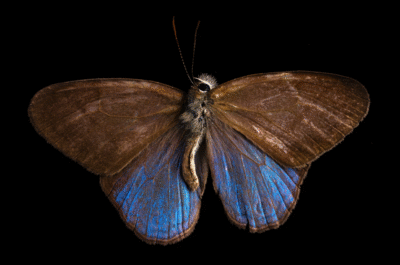
Amiga arnaca butterflies spotted in a eucalyptus plantation showed paler coloration compared to those living in their native forest habitats. The Guardian | Roberto García‑Roa
This loss of color is not a mere aesthetic change; it signals ecological imbalance. Reports from the IUCN (2024), Butterfly Conservation (2024), and IPB University (2025) indicate that up to 40% of butterfly species are declining due to the combined effects of pesticides, habitat fragmentation, and climate change. Since butterflies are important pollinators, their decline disrupts plant reproduction, weakens food webs, and threatens agricultural productivity.
Some species attempt to adapt, although their ability to do so is limited. Research shows that butterflies are shifting toward browner tones to regulate their body temperature as the climate warms. Other species, such as the blue morpho, retreat into the remaining forest fragments in search of cooler and more humid conditions. However, rising pollution, frequent forest fires, and mismatched flowering seasons make survival increasingly difficult.
The fading of butterflies reflects a wider global pattern in which ecosystems are losing their color. Coral reefs bleach white as oceans warm, grasslands turn into monotonous fields, and once vibrant skies grow quieter as birds and insects vanish. These changes reveal a growing imbalance between human activity and nature’s stability, and they threaten food systems, water cycles, and the climate itself as described by UNEP (2024).
Despite this, hope remains. Studies from the Xerces Society (2025) and WWF (2025) show that butterfly populations can recover quickly when habitats are restored. Reducing pesticide use, planting native flowers, and protecting forest edges help revive both diversity and color. Even cities can become meaningful refuges through pollinator corridors, rooftop gardens, and rewilded green spaces.
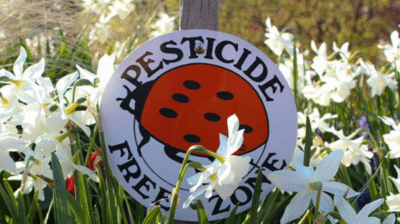
Organica Biotech Pvt. Ltd. | Ganesh Kamath
These encouraging examples demonstrate that restoration is effective and that nature responds quickly when given the chance to heal. Protecting butterflies is therefore not only about safeguarding beauty but also about strengthening ecosystems that provide food, clean water, and climate stability. Each wing and each pigment contributes to a larger web of life.
The central question is no longer whether we can afford to protect butterflies but whether we can afford to ignore their warning. A world where their colors fade is a world losing its vitality. Preserving their brilliance means preserving the Earth’s own ability to thrive.
References
Butterfly Conservation. (2024). A world of difference. https://butterfly-conservation.org/news-and-blog/number-of-european-butterflies-at-risk-of-extinction-increases
International Union for Conservation of Nature (IUCN). (2024). Butterflies and pollinators: Status and trends in global biodiversity. Gland, Switzerland: IUCN. https://www.iucn.org/resources/publication
IPB University. (2025, April 22). Butterfly population is declining: IPB researcher gives short- and long-term solutions. Bogor: IPB Press. https://www.ipb.ac.id/news/index/2025/04/butterfly-population-is-declining-ipb-university-researcher-gives-short-term-and-long-term-solutions
United Nations Environment Programme (UNEP). (2024). Global Biodiversity Outlook 6: The urgency of reversing biodiversity loss. Nairobi: UNEP. https://www.unep.org/resources/Global-Resource-Outlook-2024
Xerces Society for Invertebrate Conservation. (2025). Pollinator habitat restoration and pesticide reduction strategies. Portland, OR: Xerces Society. https://www.xerces.org/bug-banter/state-of-butterflies-in-united-states-roadmap-for-recovery
National Wildlife Federation (NWF). (2025, March 6). Federal investments needed to sustain Eastern Monarch population increase. https://www.nwf.org/Home/Latest-News/Press-Releases/2025/3-6-2025-WWF-Eastern-Monarch-Population