
Hydroponics: A Smart Solution for Farming in Limited Space

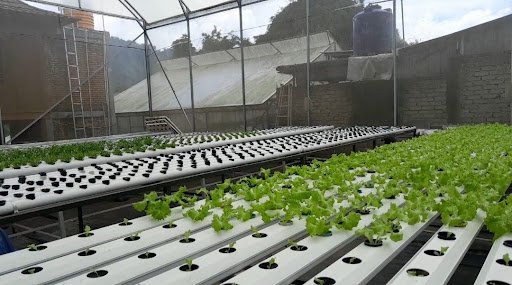
Efforts to meet national vegetable demand often run into a classic problem: increasingly limited fertile land. The phenomenon of converting agricultural land into residential and industrial areas has disrupted conventional food production. Urban farming has emerged as a savior, bringing a breath of fresh air. Its key strategy no longer relies on vast tracts of land but instead shifts to hydroponic systems. This technique has proven effective at maximizing harvest yields in limited spaces because it allows us to control the growing environment with far greater precision.
Technically, hydroponics is a cultivation method that uses water as the primary growing medium. Etymologically, the name derives from the Greek words hydro (water) and ponos (power), meaning we harness water to deliver essential nutrients directly to the plant’s roots. In stark contrast to soil-based media, where nutrient content is often difficult to predict and influenced by environmental residues, hydroponics places full control in the farmer’s hands. We have absolute authority over critical parameters, ranging from pH levels, which determine the solubility of nutrients, to solution concentration or Total Dissolved Solids (PPM). With this strict control, the risk of crop failure due to nutrient imbalance can be minimized to the lowest possible level.
FamiliIAAS, why is hydroponics so much more productive? The answer lies in the plants’ own energy management. In a hydroponic system, nutrients are provided in a liquid form that is already dissolved and ready for absorption. Plants no longer need to expend significant energy extending their roots deep into the soil in search of nutrients. The energy thus saved is redirected by the plant to accelerate vegetative growth, such as the formation of broader leaves and sturdier stems. As a result, the harvest period becomes significantly shorter compared to conventional methods.
Beyond energy efficiency in plants, this system is a tangible manifestation of resource conservation. Hydroponics is highly water-efficient because it uses a closed-loop system. The flowing water is not lost by being absorbed into the soil but is instead collected and recirculated. In the future of agriculture, which is haunted by water crises, hydroponics becomes a highly relevant solution. Within this ecosystem, we recognize two leading systems most frequently applied for leafy vegetables, there is Nutrient Film Technique (NFT) and Deep Flow Technique (DFT).
In the Nutrient Film Technique (NFT) system, plant roots are continuously supplied with a very thin stream of nutrients, like a film, about 24 hours a day. The system’s inclined design allows water to flow constantly, automatically delivering an abundant supply of dissolved oxygen to the root zone. Sufficient oxygen is key to ensuring optimal root respiration and photosynthesis. However, this system demands high precision, the water volume must be carefully managed to prevent it from pooling too deeply, ensuring the roots can breathe freely without the risk of rotting.
On the other hand, for those seeking greater peace of mind, the Deep Flow Technique (DFT) system is the ideal choice. Unlike NFT, DFT features a nutrient solution pool with a specific depth (typically 2–5 cm) within the system. Its main advantage lies in safety, in the event of technical issues such as a pump failure or power outage, the plant roots will remain submerged in the nutrient solution. This mechanism is crucial for maintaining stable nutrient intake and moisture levels, especially in regions with extreme environmental temperature fluctuations, such as high-altitude areas or regions frequently experiencing scorching heat.
Hydroponics is not just a hobby trend, but a strategic solution amid widespread land conversion and urbanization. Its flexibility is remarkable; this system can be implemented anywhere, from a cramped apartment balcony to a vertical rack in a home’s hallway. With hydroponics, every household has the potential to grow fresh vegetables on its own without needing a large plot of land. (GIA)
Author: Gita Mutiara Auliya
References:
Latipah, U., & Simatupang, D. S. (2023). Sistem otomatisasi pada tanaman hidroponik deep flow technique menggunakan IoT berbasis web. Journal Computer Science and Information Technology, 4(2), 322–331.
Pamungkas, A. G., Suryaman, A. L., Prastiwi, L., Akbarita, R., Tutuarima, V. I., Lestari, W. W., Zahro, Z. W., Eksakta, F. I., Nahdlatul, U., & Blitar, U. (2022). Sistem Pengairan Otomatis pada Budidaya Hidroponik dengan Nutrient Film Technique. J-Dinamika, 7(2), 347–350.
Pramartaningtyas, E. K., Ma’shumah, S., & Fuad, M. I. (2022). Analisis performa sistem kendali pH dan TDS terlarut berbasis Internet of Things pada sistem hidroponik DFT. Jurnal Resistor, 5(1), 1–9.
Safir, I., & Nurza, A. (2022). Cultivation of water spinach (Ippomea reptans poir) production by using DFT dan NFT. JOSR: Journal of Social Research, 1(10), 1110–1115.
Wulandari, Y., Hartanti, A., & Atviano, B. (2019). Urban farming dengan hidroponik menggunakan zat pengatur tumbuh untuk peningkatan pertumbuhan tanaman kangkung. Jurnal Perkotaan, 11(1), 1–13.