Compost Tea: A Liquid Organic Fertilizer Innovation for Sustainable Agriculture

Indonesia’s agricultural sector’s excessive dependence on chemical fertilizers has triggered land quality degradation. This phenomenon is marked by a decrease in soil quality, nitrate pollution that causes water contamination, and the risk of chemical residues on crops that will impact health if consumed. As a sustainable solution, the use of organic materials such as manure and compost is highly recommended to restore soil structure and stimulate plant root systems without damaging the ecosystem.
Compost plays a crucial role in improving soil structure through the decomposition process by decomposer microorganisms into simple organic compounds that fill the soil pore spaces. This process creates a more crumbly (loose) soil texture. Organic material also functions as a cementing agent that strengthens soil aggregates and increases water holding capacity.
Biologically, organic matter is the main energy source for soil biota such as worms and beneficial microflora. The presence of these organisms creates a symbiosis that supports nutrient availability for plants.
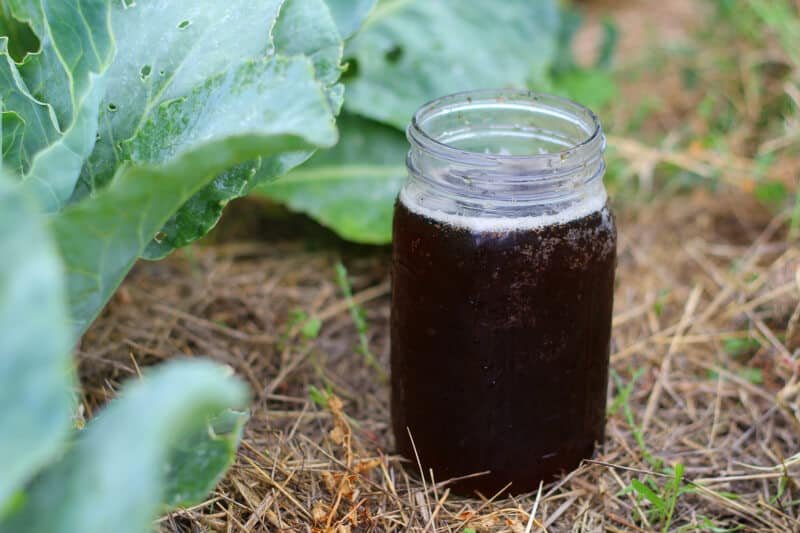
One of the weaknesses of solid compost is its slow nutrient release process, especially complex compounds like humic acid, which take a long time to be absorbed by plants. Compost Tea comes as an innovation in liquid organic fertilizer by extracting nutrients and beneficial microbes into a liquid form, making them more bioavailable.
Compost tea functions doubly as:
- Organic Liquid Fertilizer: Provides macro and micronutrients that can be directly absorbed.
- Biocontrol Agent: Contains microbes (bacteria, fungi, Actinomycetes) that produce antibiotics and are competitive against soil-borne pathogens.
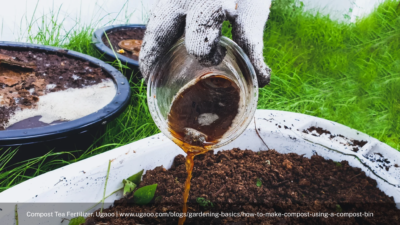
Technically, there are two main methods: Non-Aerated Compost Tea (NACT) and Aerated Compost Tea (ACT). The use of an aerator (ACT method) is generally more recommended because it speeds up the fermentation period and suppresses the growth of potentially pathogenic anaerobic microbes.
Manufacturing Procedure:
- Raw Materials: A mixture of chicken and cow manure (1:1 ratio) totaling 1-2 kg.
- Solvent: 20 liters of clean water (chlorine-free).
- Bioactivator & Energy: Add 20 ml of molasses (palm sugar) as a carbon source and 20 ml of EM-4 as a microbial starter.
- Fermentation Process: The mixture is fermented in a closed container. If using the non-aeration method, manual stirring is done regularly (15 minutes each day) for 14 days to maintain dissolved oxygen levels.
- Completion: The solution is filtered to separate solid residues before application.
Based on literature studies, application through the soil (soil drench) has been proven to be more effective in increasing soil microbial populations compared to spraying on leaves (foliar spray).
How to apply:
- Application Time: Starts at the early vegetative phase (for example, 2 Weeks After Planting/WAP).
- Method: The solution is applied to the root area using a sprayer or poured directly. This ensures that the functional microbes in the compost tea directly colonize the rhizosphere area to protect the plants from disease disturbances.
The excessive reliance on chemical fertilizers in Indonesia has led to significant agricultural and environmental degradation, including soil depletion, water pollution, and chemical residues on crops. To transition toward sustainable agriculture, organic amendments like manure and compost are essential to restore soil structure, increase water-holding capacity, and stimulate vital soil biota. (FDY)
Author: Marsya Aulia Khusnul Khatimah
References:
Berek, A. K. (2017). Teh Kompos dan Pemanfaatannya Sebagai Sumber Hara dan Agen Ketahanan Tanaman. Savana Cendana, 2(4), 68–70.
Nasution, R. P., Sudirman, S., & Gani, A. (2023). Effects of compost and a dose of compost on the growth and yield of swamp rice (Oryza sativa L.). Journal of Tropical Agriculture and Food Science, 11(1), 35-42.
Pupuk Indonesia. (2025). Pupuk Indonesia: Sampai 3 Januari 2025 ada 27.092 transaksi petani tebus pupuk bersubsidi. https://www.pupuk-indonesia.com/media-info/detail/646/pupuk-indonesia-sampai-3-januari-2025-ada-27092-transaksi-petani-tebus-pupuk-bersubsidi.
Waliczek, T. M., & Wagner, N. C. (2023). An Investigation of The Impact of Compost Tea Applications on Turf Quality and Soil Microbial Activity. Journal of Environmental Horticulture, 41(1), 1–6.
Widowati, S., Rahman, A., & Putri, D. (2022). Dampak penggunaan pupuk kimia terhadap biaya operasional dan keuntungan petani. Pertanian Press. https://epublikasi.pertanian.go.id/pertanianpress/catalog/download/46/39/255?inline=1.