Utilization of Tobacco Biomass Carbon as CO2 Adsorbent for Factories

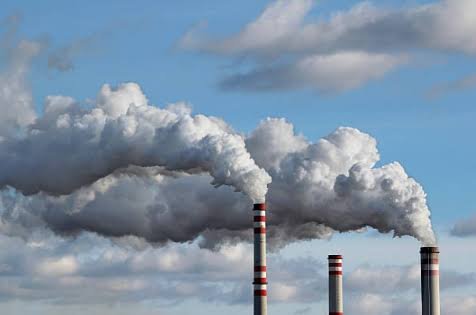
Air pollution caused by factory fumes | FTMM NEWS
According to data from the Ministry of Industry (Kemenperin), greenhouse gas (GHG) emissions from Indonesia’s industrial sector reached 238.1 million tons of CO2e in 2022. This figure is considerable, especially as records show that between 2015 and 2022, the industrial sector’s contribution to pollution through greenhouse gas emissions ranged from 8% to 20% of total national greenhouse gas emissions. The largest sources of emissions in this sector come from energy use and industrial processing. This condition indicates that industrial activity is one of the main factors driving the rising concentration of greenhouse gases in the atmosphere, so serious efforts are needed to reduce it.
On the other hand, according to Statistics Indonesia (Badan Pusat Statistik) in 2023, the number of factories in Indonesia reached 31,921. Of these, 25,312 factories are concentrated on Java, making it the island with the highest factory density, while 6,609 factories are located outside Java. This large number of factories creates a very high potential for air pollution. The problem is made worse because most waste in the form of exhaust smoke is not treated first and is released directly into the air. As a result, the emissions produced keep accumulating in the atmosphere and worsen air quality, especially in areas with dense industrial concentrations.
Another problem arises in the agricultural sector. Based on data from Wulandari et al. (2026), Indonesia ranks fourth among the world’s largest raw tobacco-producing countries, with production of around 238.8 thousand tons, or about 4.2% of the world’s total tobacco. However, behind this impressive achievement, the tobacco industry leaves behind a serious problem that has long received little attention: waste. According to Manthos and Tsigkou (2025), the waste generated from tobacco plants is 30% of the harvest. Calculated from national production of 238.8 thousand tons, the waste produced nationally is estimated at 71.64 thousand tons per year. This amount is substantial and will become an environmental burden if it is not put to good use.
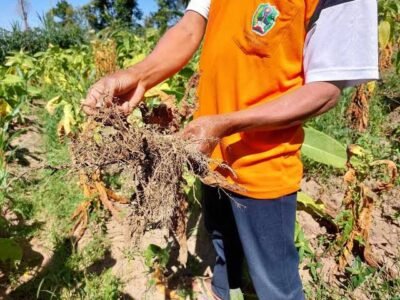
the tobacco plants are ruined and end up as waste | Beritajatim
Although they appear to be two separate problems, the two can in fact complement each other. Tobacco waste has the potential to be used as an adsorbent material to help reduce gas emissions produced by the industrial sector. According to Fathoni et al. (2024), the adsorbent commonly used in adsorption processes is activated carbon. Activated carbon can be used effectively as an adsorbent because it has many large and deep pores, giving it a relatively large surface area for capturing substances.
The good news is that tobacco stalks are composed of roughly 34,1% cellulose, 21,8% hemicellulose, and 19,4% lignin (Li et al., 2024) . This lignocellulosic content indicates that tobacco stalks have great potential to be turned into activated carbon, so that waste which once had no value can be transformed into a useful material.
The potential use of this waste is also in line with previous research findings. According to Sylvia et al. (2019), the results of their research and discussion show that adsorbents made from biomass waste are able to bind carbon dioxide (CO2). Therefore, processing tobacco waste into adsorbents can be a step that addresses two problems at once: reducing the accumulation of agricultural waste and helping to cut CO2 emissions from the industrial sector. (MUAS)
Author: Mumahad Aqil Syafiq
References:
Badan Pusat Statistik. (2023). Jumlah industri pengolahan besar dan sedang menurut provinsi di Pulau Jawa. https://www.bps.go.id/id/statistics-table/2/NzMyIzI=/jumlah-industri-pengolahan-besar-dan-sedang–jawa-dan-
Fathoni, R., Karmila, Nitami, D. A., & Simanjuntak, M. A. F. (2024). Pengaruh waktu dan konsentrasi adsorben kulit jagung terhadap penurunan konsentrasi logam berat. Jurnal Chemurgy, 8(1), 98–102. http://e-journals.unmul.ac.id/index.php/TK\
Institute for Essential Services Reform. (2023, 27 Juli). Peran industri menuju masa depan bersih. https://iesr.or.id/peran-industri-menuju-masa-depan-bersih/
Manthos, G., & Tsigkou, K. (2025). Upscaling of tobacco processing waste management: A review and a proposed valorization approach towards the biorefinery concept. Journal of Environmental Management, 387, 125942. https://doi.org/10.1016/j.jenvman.2025.125942
Li, D., Wu, R., Zhang, S., Liu, Z., Wei, P., Hu, X., Huang, L., Shen, X., Jiang, J., & Wang, L. (2024). Sulfite pretreatment enhances tobacco stalk deconstruction for cellulose saccharification and lignin pyrolysis. Catalysts, 14(12), Artikel 889.
Sylvia, N., Sobrina, L., & Nasrun. (2019). Optimasi proses penyerapan CO2 dengan adsorben karbon aktif menggunakan Computational Fluid Dynamics (CFD) dan Response Surface Methodology (RSM). Jurnal Teknologi Kimia Unimal, 8(1), 69–82. http://ojs.unimal.ac.id/index.php/jtk
Wulandari, Y., Rahman, R. Y., Ubaidillah, M. F., & Shafwana, N. A. (2026). Analisis time series untuk prediksi harga tembakau di Provinsi Jawa Timur. Agricore: Jurnal Agribisnis dan Sosial Ekonomi Pertanian Unpad, 11(1), 27–37.